
Order "Latin American food" in a restaurant and you might get a plate of rice and beans, a slab of grilled beef, or a bowl of fish cooked in lime at the table. All three can be labeled the same way. That's the trap. The term covers 20-plus countries and roughly 650 million people spread from the Rio Grande to Patagonia, and the food changes completely depending on whether you're standing in a highland market in the Andes, a Caribbean port town, or the middle of the Amazon basin.
I learned this the expensive way. Years ago I spent two weeks in Mexico City eating what I thought was "authentic Latin food," then flew to Lima and realized I hadn't tasted anything resembling Peruvian cooking at all. Two different worlds, both technically Latin American, almost nothing in common on the plate. That gap is what this guide fills. Instead of another list of empanadas and arepas, here's a regional map built on flavor logic, the ingredients that actually define each zone, and how to eat well once you're there.
Key Takeaways
- "Latin American cuisine" isn't one cuisine. It's at least five distinct regional traditions, each shaped by different geography, native populations, and colonial history.
- Three ingredients show up almost everywhere — corn, beans, and chili peppers — but the techniques and seasonings around them diverge fast.
- Acidity is the connective tissue of the region. Lime, vinegar, and fermented sauces do more work than most outsiders expect.
- The Andean highlands, the Caribbean coast, the Amazon, Mesoamerica, and the Southern Cone each reward a different strategy at the table.
- Regional pride runs deep. The best food is usually the local specialty, not the pan-Latin menu at a tourist restaurant.
- Street markets, not restaurants, are where you taste the real version of almost any regional dish.
What makes Latin American cuisine regional rather than one thing
Geography decides everything. A country with a 4,000-meter mountain range, a tropical coastline, and a chunk of rainforest inside its borders will have wildly different cooking in each zone, and that's before you add the history.
Here's the thing most guides skip: the forces that shaped the food didn't arrive the same way everywhere. Indigenous civilizations had already built sophisticated cuisines around corn, potatoes, quinoa, cacao, and chili before Europeans showed up. Then colonization layered on wheat, pork, beef, cheese, and frying techniques. Then enslaved Africans brought okra, plantains, rice-cooking methods, and deep-frying traditions to the Caribbean and Brazil. In Peru and parts of Brazil, later waves of Chinese and Japanese immigration added soy, ginger, and raw-fish technique — which is exactly how ceviche evolved the way it did.
The three anchors: corn, beans, and chili
Corn is the backbone from Mexico down through Central America and into the Andes. Beans appear almost everywhere as the everyday protein. Chili peppers — ají, chile, whatever the local name — are the flavor engine. Everything else is regional variation on top of that base.
Why the same dish tastes different by country
Take the empanada. In Argentina it's wheat dough, baked or fried, stuffed with beef, egg, and olives. In Colombia, it's often made from cornmeal and fried until crunchy. In Chile, it's bigger and baked. Same word, three unrelated eating experiences. The name travels faster than the recipe.
The flavor logic: acidity, smoke, and the sofrito base
Once you understand the underlying structure, you can predict what a dish will taste like before you order it. That's more useful than memorizing fifty dish names.
Acidity does the heavy lifting
Lime, sour orange, vinegar, and fermented sauces cut through fat and richness across the whole region. Ceviche is lime taken to its logical extreme. Mexican salsas balance chili heat with tomatillo or lime. Caribbean cooking leans on sour orange and vinegar marinades for pork and fish. If a plate feels flat, it's almost always missing acid, not salt.
Smoke and char
Grilling over wood or charcoal runs from Argentine asado to Mexican carne asada to Andean anticuchos. The char isn't decoration. It's the primary seasoning on a lot of cuts.
The sofrito and recado foundation
Most savory dishes start with a base of sautéed aromatics. In the Spanish Caribbean it's sofrito — onion, garlic, peppers, herbs. In Mexico it's closer to a chili-and-tomato base. In the Yucatán, recado pastes built on achiote do the work. Same idea, different building blocks.
| Region | Core ingredients | Signature technique | Dish to try first |
|---|---|---|---|
| Mesoamerica (Mexico, Central America) | Corn, beans, chili, tomatillo, cacao | Nixtamalization, grinding, comal cooking | Tacos al pastor, mole |
| Andean highlands | Potatoes, quinoa, ají, corn | High-altitude roasting, clay-pot cooking | Ceviche, anticuchos, causa |
| Caribbean coast | Plantain, rice, coconut, sour orange | Frying, marinating, one-pot rice | Tostones, arroz con pollo |
| Amazon basin | River fish, cassava, tropical fruit | Wrapping in leaves, boiling | Tacacá, patarashca |
| Southern Cone | Beef, wheat, stone fruit, herbs | Wood-fire grilling, baking | Asado, empanadas, chimichurri |
A region-by-region walk through the plate
The table gives you the skeleton. The details are where it gets interesting, because each zone has a logic you can feel once you're eating in it.
Mesoamerica: the corn civilization
Mexico and Central America built a whole food system around nixtamalized corn — corn treated with lime, which unlocks nutrients and makes masa. That single process produces tortillas, tamales, and endless variations. Chili comes in dozens of varieties, used fresh, dried, smoked, or ground. This is the region where you should eat the street food, not the sit-down version. Late-night tacos from a stand outclass almost any restaurant plate.
The Andean highlands and the Pacific coast
Peru packs more into one country than most continents. The coast gives you ceviche and a Japanese-Peruvian fusion that changed fine dining worldwide. The highlands give you potatoes in hundreds of varieties, quinoa, and slow-cooked stews. Bolivia adds its own spin with salteñas and silpancho. If you only eat one meal here, make it ceviche, and eat it at lunch — that's when it's fresh and when locals eat it.
The Caribbean coast
Colombia, Venezuela, and the islands share a coastal cooking defined by coconut, plantain, and rice. Tostones, patacones, arepas, and rice cooked with coconut milk show up constantly. African influence is strongest here — the frying technique, the plantain, the one-pot rice dishes all trace back to it.
The Amazon basin
This is the region most outsiders never taste. River fish wrapped in banana leaves, cassava in sweet and bitter forms, and tropical fruit you won't find exported. Tacacá in Brazil, patarashca in Peru. It's a cuisine built on what the river and forest provide, and it barely resembles anything in a Latin restaurant abroad.
The Southern Cone
Argentina, Uruguay, Chile, and southern Brazil are beef and wheat country. Asado — wood-fire grilling — is a social ritual, not just a cooking method. Chimichurri, empanadas, and Italian-influenced pasta and pizza round it out. The European imprint is heaviest here, which is why the food feels closer to what a European visitor might recognize.
How to eat well across the region: practical notes
None of the above matters if you end up eating the same pan-Latin menu in every city. Here's how to avoid that.
Go to the market first
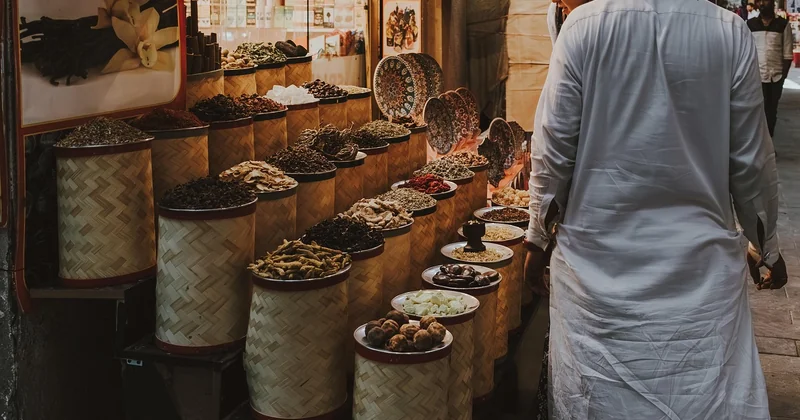
Every serious food town has a central market where the regional specialty is made properly and cheaply. Merced in Mexico City. San Pedro in Cusco. Mercado Central in Santiago. Eat there before you eat anywhere else. I've had better meals at market stalls than at restaurants charging ten times the price, more than once.
Eat the local specialty, not the tourist menu
If a menu offers tacos, ceviche, and asado side by side, walk away. That's a restaurant serving a blended idea of Latin food, not a regional kitchen. Regional pride is real — a good cook makes what their grandmother made.
Mind the timing
- Peruvian ceviche: lunch, not dinner.
- Argentine asado: a long weekend lunch, not a quick dinner.
- Mexican street food: late night and early morning.
- Caribbean one-pot rice: the midday meal.
- Colombian food is huge at breakfast — try calentado if you get the chance.
What about European cuisine in the region?
You'll hear the phrase "Latin American food" used alongside "European cuisine," and they get treated as opposites. That's misleading. European cooking didn't stay separate — it fused into the local one. Wheat, pork, cheese, and frying technique are now inseparable from what's eaten across the region. The question isn't whether the food is European or indigenous. It's which layer dominates on a given plate, in a given region. In the Southern Cone, the European layer leads. In the Andean highlands, the indigenous base holds. In the Caribbean, the African layer is the loudest voice.
Where to start if you have one meal
Pick the region, then pick the dish that region is proudest of. Don't try to sample everything at once. A single well-made regional specialty tells you more about the food culture than a plate of assorted "Latin favorites" ever will.
And honestly? The best way to understand this food is to stop calling it one cuisine. Treat every country as its own kitchen with its own rules. Once you do that, a meal abroad stops being a vague category and becomes a specific place with a specific flavor — and that's the whole point.
Next time you see a menu printed with that generic label, ask a simple question instead: which region is this, actually? The answer usually tells you whether to sit down or keep walking.


