Somewhere in a hotel lobby in Seoul, a well-dressed businessman is watching you eat your breakfast. He is not being rude. He is counting. You have just used your left hand to pass him a business card, taken it with one hand, and put it in your pocket without reading it. In his eyes, you have committed three small mistakes in five seconds.
That is the strange part of traveling abroad. The things that make you look careless are almost never the things you would guess. Nobody tells you that a gesture you consider friendly reads as aggressive in another country, that a compliment about someone's home can sound like an insult, or that your default tipping habit can quietly mark you as someone who does not understand where he is. Cultural etiquette is not a dress code for polite people. It is a set of signals that decide how you get treated.
What follows is the working list I wish someone had handed me years ago, before I learned a few of these the hard way.
Key Takeaways
- Etiquette abroad is mostly about reading signals, not memorising a list of forbidden gestures.
- The left hand, the soles of your feet, and a business card are the three things that trip up travelers most often.
- Tipping is the single fastest way to look like a tourist who has not done his homework.
- A small, locally appropriate gift beats an expensive one every time — and never bring certain items to certain countries.
- The traveler who asks one honest question is forgiven more than the one who performs confidence.
- None of this matters if you do not learn the two most useful words in any language: please and thank you.
What cultural etiquette for traveling abroad actually means
Strip away the travel-magazine tone and etiquette means something simple. Every culture runs on a set of unspoken rules about respect, personal space, time, and hierarchy. When you break one, people rarely tell you. They adjust their behaviour toward you instead, and that adjustment is usually invisible to the person who caused it.
I learned this in a way I still wince about. Years ago I handed a book to a colleague in Marrakech with my left hand. He took it, said nothing, and was noticeably cooler to me for the rest of the week. It took a friend to explain why. In much of the Middle East and parts of Asia and Africa, the left hand is reserved for cleaning the body. Passing anything with it, especially food or something you have written your name on, is a small insult. Nobody will correct you. They will just reclassify you.
The reason this matters more than it sounds is that etiquette violations follow a specific pattern: the more polite the culture, the less likely anyone is to point out your mistake. In a blunt culture, you get told off and you learn. In a deferential one, you get quietly downgraded and you never find out.
What are the cultural considerations for traveling abroad?
The considerations that matter fall into five buckets, and almost every specific rule you will ever read is a variation on one of them:
- Hands and feet. Which hand is clean, which is not, and where your feet are allowed to point. The soles of your feet are the lowest part of you, and showing them to a person is an insult across much of Asia and the Arab world.
- Personal space and touch. How close people stand, whether a handshake is offered at all, and whether physical contact between the sexes is acceptable in public.
- Time. Whether arriving ten minutes late is normal, rude, or irrelevant. This varies wildly and it is rarely about politeness.
- Hierarchy and age. Who is served first, who speaks first, who gets the better chair, and how you address someone older or more senior than you.
- Gifts and transactions. What you bring, what you never bring, and when money should change hands.
If you internalise those five, you can walk into almost any country and figure out the specifics quickly. And that is the real skill here. Nobody memorises a global rulebook. You read the room.
Travel etiquette meaning: what the phrase really covers
Travel etiquette is often confused with manners, and they are not the same. Manners are how you treat a person. Travel etiquette is how you signal that you understand where you are. It covers greetings, dining, dress, tipping, haggling, gift-giving, and photography. Note what is missing from that list: how much you know. The whole point is that you do not have to be an expert. You have to look like a guest who is paying attention.
The 6 common mistakes to avoid when traveling
I have made at least four of these. I am not going to pretend otherwise.
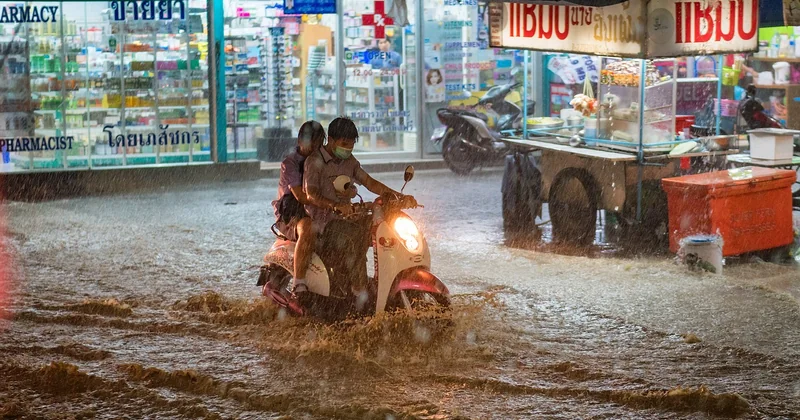
What are 6 common mistakes to avoid when traveling?
- Pointing with your feet or your index finger. In Thailand, pointing a foot at a person is an insult. In much of Asia and the Arab world, so is pointing with a single index finger. Use your whole hand, palm up.
- Using the left hand for anything social. Food, gifts, business cards, handshakes. If you are unsure, use your right.
- Giving the wrong gift. Sharp objects — knives, scissors, letter openers — symbolise the severing of a relationship in Chinese culture. A clock is worse: it sounds like the phrase for attending a funeral. Avoid white flowers and anything in sets of four in much of East Asia.
- Tipping like an American. In Japan and South Korea, leaving cash on the table can confuse or embarrass staff. In parts of Europe, the tip is often already in the bill, and adding a large one signals you did not read it.
- Bad hand gestures. The "thumbs up" is offensive in parts of the Middle East and West Africa. The "OK" sign formed with thumb and index finger is vulgar in Brazil and offensive in several Mediterranean countries. The peace sign with your palm facing inward is an insult in the UK and Australia.
- Sustained eye contact or none at all. Prolonged direct eye contact with a senior person reads as a challenge in many East Asian and Middle Eastern settings. Avoiding it entirely reads as dishonesty in much of Northern Europe and North America. Match the person in front of you.
The common thread in all six is that they are reflexive. You do them without thinking, because they are wired into how you move through the world. That is exactly why they are easy to make and hard to notice.
The business card thing nobody warned you about
If you take one single habit from this article, take this one. In Japan, South Korea, and much of East Asia, a business card is treated as an extension of the person handing it to you. You receive it with both hands. You read it — actually read it, do not glance — and you acknowledge the person. You do not write on it, bend it, or slide it into your back pocket in front of them.
I watched a colleague from Hamburg fumble this at a Tokyo meeting and then spend the rest of the hour slightly behind. His ideas were good. His card handling had already set a tone he could not recover from.
The top 10 travel tips that hold up everywhere
Here is the part I actually trust. These are the practices that have kept me out of trouble in countries where I did not speak a word of the language and had no idea what I was doing.

What are the top 10 travel tips?
- Learn please and thank you before you land. Two words, badly pronounced, open more doors than fluent explanations.
- Watch what locals do, then copy it. Where they put their hands, how loudly they talk, whether they queue, whether they remove their shoes. The answer is always visible.
- Dress one notch above what you think is needed. In religious sites, markets, and business districts, this is the cheapest form of respect you can buy.
- Ask before you photograph people. A gesture toward your camera and a questioning look costs nothing. In some countries, photographing people, military sites, or religious ceremonies is genuinely sensitive.
- Keep your voice down in shared spaces. Volume is the most common way travelers mark themselves as visitors, and it is the easiest thing to fix.
- When in doubt, do less. Do not hug, do not pat shoulders, do not ruffle a child's hair. Wait for the other person to initiate physical contact.
- Carry a small, appropriate gift when invited to a home. Flowers are usually safe — but not white ones in much of East Asia, and not chrysanthemums in parts of Europe.
- Never discuss politics, religion, or salary unless the other person raises it. This one travels further than any specific gesture rule.
- Show up on time in some places and never on time in others. Punctuality is a cultural variable, not a moral one.
- Say yes to the tea, the coffee, or the snack. Refusing hospitality can read as refusing the person offering it.
One question that saves you every time
"Is there anything I should know about how things are done here?"
I started asking this at the start of every trip and it has been more useful than every guide I have read. It signals humility without fake confusion, and people almost always tell you something specific. The traveler who asks one honest question is forgiven more than the one who performs confidence.
What is the most forgotten item when traveling?
It is not the adapter, and it is not the passport photo. Ask most people who travel often and they will tell you the same thing: the physical document you cannot replace on your phone. A printed copy of your passport, your visa page, your insurance details, and one backup form of payment. Phones die, get stolen, or lose signal in the exact moment you need them most.
The second most forgotten item is less obvious, and it is the one that actually connects to everything above. A small gift or a stack of cash in the local currency, arranged before you need it. The moment you need to tip, offer a modest gift, or cover a small hospitality debt is usually the moment you have neither the right note nor the right item, and asking around at that point looks like improvisation.
A quick comparison: tipping and gift norms by region
| Region | Tipping expectation | Gift note |
|---|---|---|
| Japan and South Korea | Not expected; can cause discomfort | Use both hands; avoid sets of four |
| Continental Europe | Often included; small round-up is enough | Flowers are fine; avoid chrysanthemums |
| North America | Expected; 15–20 percent at restaurants | Wine or flowers for a dinner host |
| Middle East | Not universal; use your right hand | Sweet foods welcome; avoid alcohol |
| Southeast Asia | Rare; not on the table | Wrap gifts, never in white or black paper |
Read the table as a starting point, not a rule. The specifics shift by city, by age group, by how local the restaurant is. A five-star hotel in Bangkok and a street stall two streets away can have different norms. That is not a contradiction. That is just how it works.
The three things that actually trip people up
If I had to compress everything into three habits, here they are.
The first is treating your home culture's default as neutral. It never is. Your normal is one local arrangement among many, and it stops being invisible the moment you cross a border.
The second is over-preparing. I once spent an entire flight reading about Thai etiquette and then offended my host on the first evening by pointing at a dish with my index finger. Preparation helps. Attention helps more.
The third is apologising for the wrong thing. If you make a mistake, name it. "I think I just used the wrong hand" goes a long way, and it tells the other person you see them. Most cultures forgive an honest error much faster than a confident one.
A short list of small things that always pay off: shoes off when you see shoes at the door, a slight bow or nod when you meet someone older, cash in small notes, and a genuine thank-you in the local language, even if it is mangled. None of this is complicated. It is just easy to forget when you are tired and jet-lagged and getting off a plane.
Here is the part that stays with me. The point of all this was never to get it perfectly right. It was to make the other person feel that you noticed them. That is the whole game.
And the next time you hand someone a card in Seoul, use both hands. You will see the difference in their face before they say a word. Whether you spend the rest of the trip getting it right or not, that one small correction is enough to change how you are read — and that is what makes it worth spending a few minutes on before you go.