The top outdoor adventures for thrill seekers (and what they actually cost you)
A client of mine once called me from a hospital in Interlaken with a broken wrist and a grin you could hear through the phone. She'd just finished her first canyoning descent — 40 meters of cold water and slick rock — and her only complaint was that she hadn't booked two days. That call sums up the whole category. The best outdoor adventures for thrill seekers aren't the ones that look scary on a poster. They're the ones that leave you physically wrecked and emotionally lit up, already planning the next one before the bruise fades.
But here's what the bucket-list articles won't tell you: most of these activities have a real price tag, a real injury rate, and a real season. Pick wrong and you'll spend $400 to sit in a van for six hours. I've watched friends do exactly that. So this isn't a motivational piece. It's a working guide — costs, logistics, risk, and the stuff nobody puts in the brochure.
Key Takeaways
- The most reliable adrenaline-per-dollar comes from activities with short sessions and low gear overhead: canyoning, via ferrata, and volcano boarding beat skydiving on cost.
- Peak season matters more than the activity itself. A $180 tandem jump in March can cost $260 in July for the same 50 seconds of air.
- Certification of your operator is the single strongest safety variable. Ask for it before you pay, not after you land.
- Any activity involving sustained G-force or altitude requires a medical green light — this is not a formality.
- Emerging and regional options (Nicaragua, the Dolomites, Iceland) deliver the same rush at roughly half the price of the marquee destinations.
- Roughly a third of first-timers I've spoken to book the wrong season and end up with a cancelled or downgraded trip.
What actually counts as a thrill-seeking activity?
Thrill-seeking activities are those that combine perceived risk, physical exposure, and a genuine adrenaline response — the kind that spikes your heart rate and narrows your attention to the next three seconds. The key word is perceived. Controlled risk is what separates an adventure sport from plain recklessness.
You can sort the whole field into four families, and knowing which one you're shopping for saves a lot of money.
- Freefall and flight — skydiving, wingsuit, paragliding, hang gliding. High intensity, short duration, high cost per minute.
- Water and terrain — canyoning, whitewater rafting, coasteering, volcano boarding. Medium intensity, sessions of two to six hours, strong value.
- Vertical and technical — via ferrata, ice climbing, caving, alpine mountaineering. Requires skill progression; the reward scales with the effort.
- Speed and machine — downhill mountain biking, motocross, sandboarding on steep dunes. Accessible entry, brutal ceiling.
Intensity versus accessibility
Here's the trade-off nobody maps clearly. The activities with the highest peak intensity — wingsuit flying, big-wall climbing — take years to reach and exclude almost everyone. The activities you can book this weekend are, by definition, the lower-intensity ones at the level you'll do them.
That's not a downside. A first canyoning descent feels more intense than a tenth skydive, because novelty drives the adrenaline response far more than raw danger does. If what you want is the rush, a $120 activity you've never tried will outperform a $300 one you've done twice.
What are some of the most thrill-seeking activities?
The most consistently intense activities, ranked by how people actually describe them afterward, are wingsuit flying, big-wave surfing, free solo climbing, BASE jumping, and technical ice climbing. Below that tier you find skydiving, canyoning, via ferrata, whitewater rafting on class IV–V, and downhill mountain biking.
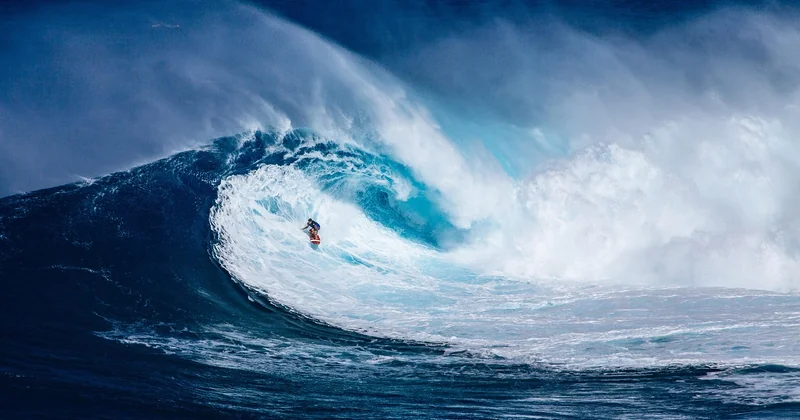
Notice the shape of that list. The top five demand years of progression and, in several cases, a community that will vouch for you before you're allowed near the exit point. The second tier you can largely start this season.
Where the real line sits
The line isn't "dangerous" versus "safe." It's consequence versus recoverability. A canyoning misstep on a guided route usually means a sprained ankle. A wingsuit misstep means something else entirely, and no amount of skill removes that asymmetry.
My honest position: for most people reading this, the second tier delivers everything they're chasing. I'll defend that claim. The gap between a first-timer's experience of a class IV rapid and a professional's experience of a big-wave set is emotional, not sensory — and you can only access one of them on short notice.
What are the top 10 extreme activities?
The ten most widely recognised extreme activities are wingsuit flying, free solo climbing, BASE jumping, big-wave surfing, high-altitude mountaineering, cave diving, downhill mountain biking, ice climbing, whitewater rafting at class V, and volcano boarding. Cost is not a reliable indicator of intensity here — cave diving is one of the cheapest entries and one of the least forgiving.
| Activity | Typical session length | Skill floor | Best season |
|---|---|---|---|
| Wingsuit flying | Under 2 minutes of flight | Hundreds of skydives required | Year-round in specific regions |
| Free solo climbing | Hours | Elite, no shortcut | Dry rock season |
| Cave diving | 1–3 hours underwater | Full technical certification | Year-round, site-dependent |
| Downhill MTB | 2–5 hours | Low entry, steep ceiling | Late spring to early autumn |
| Volcano boarding | Under 10 minutes per run | Minimal | Dry season only |
| Via ferrata | 3–7 hours | Beginner-friendly with a guide | Summer |
Two observations from that table. First, the extreme tier is dominated by activities measured in seconds and minutes of actual exposure — all the training is for a very brief window. Second, the beginner-accessible options are exactly the ones with the longest sessions, which is why they feel like better value.
What are the top 10 bucket list experiences?
The most frequently named adventure bucket-list experiences are a tandem skydive over a coastline, canyoning in the Alps or the Pyrenees, cage diving with great whites, climbing Kilimanjaro, a multi-day rafting expedition, hiking to Everest Base Camp, a Northern Lights expedition above the Arctic Circle, dog sledding, a desert sandboard descent, and a via ferrata traverse in the Dolomites.

Here's where I'd push back on the standard list. Several of those are bucket-list items because they're famous, not because they're thrilling. Everest Base Camp is a genuine physical achievement and a stunning trek — but the adrenaline component is close to zero. Same for the Northern Lights. If you're chasing the rush specifically, half the classic list is scenery with a marketing budget.
What to swap in
If intensity is the goal, replace the scenery items with these: a night descent of a via ferrata, ice climbing on a frozen waterfall, coasteering along an exposed coastline, or a multi-day caving trip with a bivouac underground. All four are cheaper than the famous equivalents and far more demanding.
I made this swap myself years ago. I'd been working down a conventional bucket list, ticking off the landmarks, and realised after the third trip that I remembered the logistics and almost none of the feeling. The shift to technical, hands-on activities fixed that. Slightly more fear, considerably better memories.
What are the top 10 best adventure vacations?
The strongest adventure vacations combine two or three complementary activities in one region, so you spend your budget on experiences rather than flights. Think the Alps for canyoning plus via ferrata plus paragliding, Iceland for ice caves plus glacier hiking plus diving between tectonic plates, or Nicaragua for volcano boarding plus surfing on the same day.
Single-activity holidays are the expensive mistake. If you fly 10 hours for one jump, the jump costs you the flight. If you base yourself somewhere with four options, each one costs a fraction of the total.
- Alps (France, Switzerland, Italy) — canyoning, via ferrata, paragliding, summer luge. Best for a mixed-ability group.
- Iceland — glacier hiking, ice caves, snorkelling in the Silfra fissure. Short season, strong payoff.
- Nicaragua — volcano boarding on Cerro Negro, Pacific surf, jungle hikes. Very low cost base.
- New Zealand — bungee, canyoning, heli-hiking. The classics, at classic prices.
- Dolomites — via ferrata networks, climbing, high-altitude cycling. Best infrastructure in Europe.
- Costa Rica — zip-lining, rafting, volcano trekking. Family-viable.
- Norway — fjord kayaking, via ferrata, base jumping history. Cold, expensive, unforgettable.
The cost reality check
Rough orders of magnitude, from what I've seen and paid. A tandem skydive runs $180 to $320 depending on region and season. A guided canyoning day sits between $80 and $150. A via ferrata guide for a group lands around $60 to $120 per person. Volcano boarding in Nicaragua costs a small fraction of any of these. Multi-day expeditions push into four figures quickly, mostly because of permits, porters, and logistics rather than the activity itself.
Two things drive the spread more than anything: how close you are to a major airport, and whether the activity requires a licensed pilot or a permit. Those two variables explain most of the pricing you'll see.
Safety, insurance, and the parts that go wrong
The most common failure isn't injury. It's a cancelled booking, an uninsured accident, or a guide who shouldn't have been operating. All three are preventable, and none of them are covered in the sales pitch.
Check the operator before you pay
Ask directly: which certification does the guiding body hold, what's the guide-to-client ratio, and what's the evacuation plan. A legitimate operator answers all three without hesitation. If you get vague answers, walk away regardless of the reviews.
I learned this the slow way. On a rafting trip years ago, our guide was competent but the safety briefing was a formality, the helmets were cracked, and the ratio was one guide to eleven clients on class IV water. We had no incident. We could have. I now ask those three questions before booking anything.
Insurance and the medical green light
Standard travel insurance typically excludes adventure sports. You need a policy that explicitly names the activity you're doing. This is a notorious gap and it catches people every season.
Medical checks are the other formality that isn't a formality. Any activity with sustained G-force, rapid altitude change, or prolonged breath-hold has real contraindications — cardiovascular conditions, epilepsy, certain inner-ear problems, pregnancy. Get a proper check. The operators' waivers exist for a reason.
Starting from where you actually are
Not everyone wants to book a flight and a course. Plenty of people want the rush without the expedition — which is a reasonable ask, not a lesser one.
Local options and indoor alternatives
Indoor climbing gyms, bouldering walls, trampoline parks with high-air zones, and obstacle-course gyms all deliver a genuine adrenaline response at low cost and zero logistics. A bouldering session is one of the most effective ones, because falls are frequent, controlled, and immediate.
Other easy-entry options that produce a real spike: cold-water immersion, high-ropes courses, zip lines, and downhill mountain biking on a rented bike at a local trail centre. None of these require certification or travel.
For adults specifically — the group that tends to assume this category has passed them by — the practical route is progression, not courage. Start with a via ferrata. Then a guided canyoning day. Then a tandem jump if you still want it. Each one builds tolerance for exposure, and tolerance is what makes the bigger activities enjoyable rather than merely terrifying.
The thing that actually makes it worth it
The activities that stick with you are almost never the ones with the biggest number attached. They're the ones where something required your full attention for a sustained stretch — where you couldn't think about work, or email, or anything else, because the next foothold needed all of you.
That's the real return. Not the photo, not the bragging rights. Forty minutes of complete presence, in a life that rarely offers four uninterrupted ones.
So the question worth asking isn't which activity is the most extreme. It's which one you can book in the next three months, at a level you can actually handle, somewhere you can get to without exhausting yourself first. Answer that and the adrenaline takes care of itself.